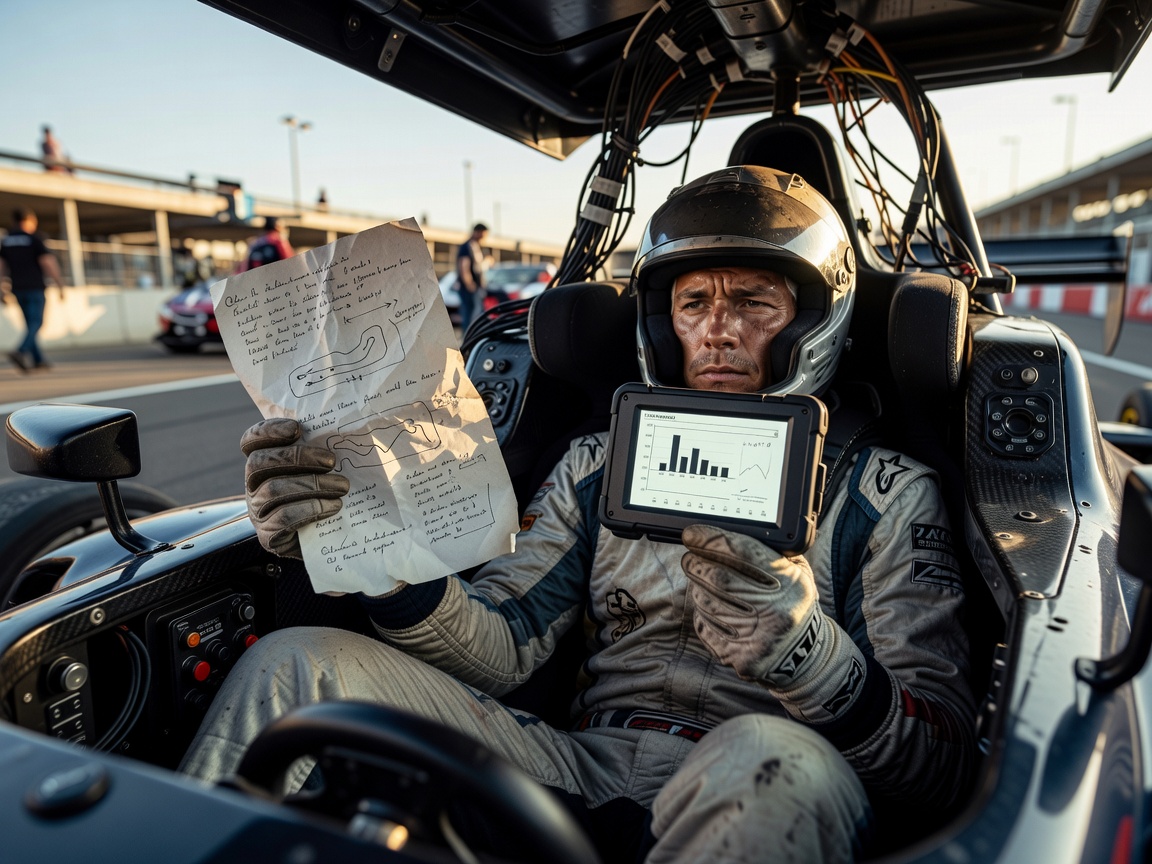
Define the work
Driver development does not begin with a target lap time. Start by choosing a useful behaviour to observe: where attention goes, whether braking is repeatable, how smoothly steering is applied or how well the driver responds to changing conditions. A narrow focus makes feedback easier to use.
Set an objective that is within the session’s control. “Use the same visual reference for turn-in” is more useful than “drive faster.” The goal is not to force a particular line or input onto every car. Circuit layout, vehicle balance, grip and event rules matter. Use an instructor when you need guidance about technique or safety.
Consistency and observation
Consistency means repeating a suitable action under comparable conditions. It is not blind repetition. A driver should continue to notice traffic, surface changes, flags and marshal instructions. The circuit is dynamic; an earlier reference may not be appropriate if conditions change.
Observation includes more than looking ahead. A driver scans the road surface, track boundaries, mirrors, other vehicles and signals according to the circuit briefing. Reference points can help organise attention. They are visual cues such as a board, kerb or change in surface. They are not universal braking markers, and they should never override safety or event instructions.
Braking discipline and steering control
A review of braking can ask whether the driver planned early, applied the pedal progressively and released it in a controlled way. Repetition matters more than chasing a late braking point. The correct approach changes with speed, grip, vehicle condition and circuit geometry. A qualified instructor can assess technique in context.
Steering control can be reviewed through smoothness, timing and whether the driver avoids unnecessary corrections. A rushed or abrupt input may disturb the vehicle, but the correct response depends on what the car is doing. Do not attempt unfamiliar recovery manoeuvres without appropriate instruction in a controlled setting.
Cornering, throttle and line selection
Cornering is a sequence of decisions. A driver observes the approach, chooses a path allowed by the event, turns in, passes the relevant part of the corner and exits within permitted track limits. Apex describes the inside reference point or area a chosen line approaches. It is a concept, not a fixed target. Some corners call for a later or earlier path depending on the following section and vehicle.
Throttle management is about measured application that suits the vehicle’s balance and available grip. Smooth progression is a useful principle, but no single pedal instruction is correct for every situation. The driver should keep attention on the full circuit and avoid being distracted by instruments or data.
Feedback that can be acted on
Feedback should link an observation to a practical next step. An instructor may note that the driver looked too near the car, then suggest an earlier visual cue. A driver can repeat a short session with that one focus and discuss what changed. Record the context: weather, traffic, tyre state, vehicle changes and fatigue can all affect comparison.
Self-assessment works best when it is honest and specific. After a session, note what felt predictable, where attention narrowed and what was confusing. Avoid interpreting a single mistake as a diagnosis. If a vehicle behaves unexpectedly, stop safely and have concerns assessed before returning to the circuit.
Video and telemetry concepts
Video can help a driver review vision, steering timing and consistency. Camera position, lens distortion and missing context can make footage misleading. Use it as a discussion aid, not as proof that a manoeuvre was safe or correct. Respect circuit rules and other people’s privacy when recording.
Telemetry may describe information such as speed, position, acceleration or pedal input, depending on the equipment. A trace can help compare two laps, but only when the data is recorded correctly and the conditions are meaningfully comparable. It does not explain traffic, grip changes, instructor decisions or the driver’s visual attention by itself. Seek competent interpretation rather than chasing isolated numbers.
Advantages and limits
A methodical review can turn a track visit into focused practice. It can also reveal when a driver needs more explanation, a rest or different instruction. Progress varies. No method guarantees a particular lap time or level of competence, and results from one car or circuit may not transfer directly to another.
Data and self-review can become counterproductive if they create pressure or distraction. Use brief notes and one priority at a time. Qualified instructors and circuit rules remain central. Never apply circuit practice to public-road driving.
Good for
This framework suits drivers who have access to supervised circuit time and want to learn from each session. It is useful to newcomers building basic observation habits and experienced participants reviewing a defined skill with a coach.
What to know
- Choose one learning objective per session.
- Use reference points as aids, not commands.
- Record conditions before comparing footage or data.
- Ask an instructor to interpret safety-sensitive technique.
- Stop, rest or seek vehicle checks when needed.